Breastfed MattersMother's Diet and Breastmilk QualityBy Michelle Branco
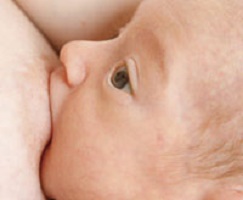
Photo © Shutterstock Images Question: Does my diet really affect the quality or quantity of my breast milk? When I am stressed, I tend not to eat and I wonder if my son is getting enough. I also feel like I don’t eat a balanced enough diet and I am wondering whether he is getting the nutrition he needs. Should I supplement him, and with what? Answer: Let’s start here: Your breast milk will always be the best food for your baby. Throughout human history, mothers have nourished their infants while eating vastly restricted diets and those infants have thrived. If a woman is sufficiently nourished to carry a pregnancy to term, her diet ought to be adequate to provide nutrition for that infant (or it’s a very foolish evolutionary bet). Babies are built not only to survive on their mother’s breast milk, but to thrive. So, will you make enough breast milk? Yes, as long as your baby will drink milk at the breast, your body will make it, even if you’re consuming a restricted diet with too few calories. The important factor is to give your baby access to the breast as often as he needs it, which can be tricky when you are feeling stressed or busy. Being aware of your stress levels is the key to be able to compensate for them. Macro-nutrients (protein, carbohydrate, fats) are affected very little by the mother’s intake. Your breast milk will contain enough calories and the right proportion of fats, protein, and carbohydrate to grow your baby to just the size he is supposed to be. The type of fats in your breast milk are affected by the types of fats you eat, but regardless of how much fat you eat, the amount of fat in your milk stays the same. Your baby will get the calories he needs in the form that his body can most easily turn them into growth. If your diet is heavy in highly-processed fats, the greater consideration than the type of fat in your breast milk is whether those highly- processed foods are allowing your body to be as effective as it can be. Some micro-nutrients are affected by maternal deficiency, but generally speaking, breast milk levels stay within healthy ranges except in cases of extreme malnutrition. Iron, calcium, zinc, copper, folic acid: Deficiency in mothers does not affect levels in breast milk. For iron, in particular, it’s worth pointing out that deficiency during pregnancy can lower stores in the baby, as can prematurity and early cord clamping – your breast milk will be unaffected, but your baby may need extra iron earlier. Talk to your health care provider about options. Vitamins A, C and E: Breast milk levels are affected somewhat by maternal intake, but severe deficiency would be signaled first by illness in mothers. Excess intake of water soluble vitamins will not raise levels beyond a certain point, but over-supplementation of fat- soluble vitamins can be toxic to both of you. Vitamin B1, B2, B6, B12: B vitamin levels are related to your intake, but like other vitamins, severe deficiency is very rare. B12 is a special case for mothers following a vegan diet or who have chronically low levels due to other conditions. Severe deficiency can cause acute symptoms in infants and should be addressed in pregnancy in order to allow levels to rise. See your health care provider and ask for levels to be tested while you are pregnant. Vitamin D: This is probably the trickiest one for mothers, regardless of diet, because vitamin D is not meant to be absorbed primarily through diet. We are learning more about the connection between non-acute vitamin D deficiency and health problems, while at the same time, the amount and quality of sunlight that most families receive is declining. Here are two possible approaches: Supplement the baby: Supplement with single-drop supplements. (Some sources recommend 400IU daily; your health care provider may suggest a 1000IU or more.) Place a drop directly on your finger or nipple and let the baby lick it. Avoid supplements that contain unnecessary colors, flavors, and other additives – babies often object strongly to them (smart kids!) and even 5ml can be a struggle to get into a baby. Supplement the mom: Assuming that your vitamin D levels in pregnancy are adequate, current research suggests that supplementing yourself with about 6000IU daily will raise vitamin D levels in breast milk to adequate levels. If this is the approach you prefer, have a blood test done to ensure that your own levels are adequate. Does this all mean that diet doesn’t matter? If you are choosing between breast milk and any other alternative, even breast milk is the better choice regardless of your diet. There’s no alternative that would be healthier. If your diet is unhealthy, the risk to your baby is not primarily the quality of your breast milk, but that his mom is not feeling at her best to enjoy and care for him. The baby of a mom who is feeling unwell needs her breast milk even more to make up for other things she may not be able to do for him. An unhealthy diet often means an unhealthy gut, which is irritated and lacking in the healthy bacteria it needs to function optimally. The health of your gut is tied very closely to the health of your baby’s gut, which has lifelong implications. The better the health of your gut is, the more effectively you are digesting all the food you take in and the fewer irritating proteins you pass through your bloodstream to your breast milk. Your baby benefits from the greater availability of nutrients, less irritation in his gut, and a variety of components that support the normal development of his digestive system. Research into how the health of the gut affects the immune system, as well as the functioning of the brain, is exploding and providing fascinating insights to how what we eat provides so much more than simple fuel. The baby whose gut is kept healthy today will go on to keep her own baby’s gut healthy in the next generation (and that baby is more likely to have a vibrant grandma to play with too!). We pass on more than nutrition and a healthy gut through breastfeeding. What you eat as a breastfeeding mother is communicated through the changing taste of your breast milk each and every day – this is how babies learn what foods we eat in our family. Very often parents will share with me that their diet has improved because of their baby. They are committed to a healthy diet for their children; their family table is healthier too. It’s one of the little understood benefits of breastfeeding: When you begin by choosing the best food for your baby, you tend to continue. I urge you to give yourself the same consideration that you’ve given to your baby and focus on feeding yourself too. Everyone will be the better for it. Michelle Branco is a lactation consultant in private practice, La Leche League Leader, and mother to Isabelle and Thomas, both breastfed. |
|
|