Greening the Ghosts & the Ghoulies
by Wendy Priesnitz
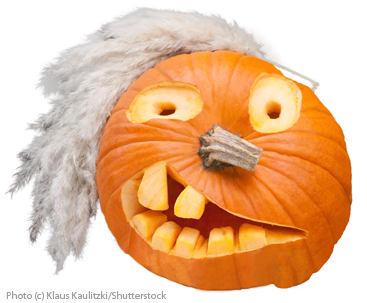 Halloween can be a nightmare for natural living families, with all of the excess packaging; expensive, plastic single-use costumes; and unhealthy eating. It's enough to spook a green thinker into ignoring the occasion altogether! But there are ways to enjoy Halloween with our children without damaging their health or forsaking our eco-ethics. Halloween can be a nightmare for natural living families, with all of the excess packaging; expensive, plastic single-use costumes; and unhealthy eating. It's enough to spook a green thinker into ignoring the occasion altogether! But there are ways to enjoy Halloween with our children without damaging their health or forsaking our eco-ethics.
Costumes
Halloween costumes are hugely influenced by commercial media, with fads being driven by television shows and movies, and are increasingly sexualized. So families might find this a good place to inject some media literacy into their discussions. Rather than buy a new costume that you (or your child) will only wear once and throw away, make one out of clothes and fabrics you already have. There are lots of great websites with ideas and patterns. Try collecting pop and beer can tabs to create chain mail, or gluing leaves to a leotard to construct a human tree. You can also create costumes from items purchased at thrift shops and yard sales.
Swap costumes with neighbors and friends. Or advertise on your local freecycle or craigslist websites for a used costume. National Costume Swap Day hosts a free website that is a hub for people around the world who are interested in saving money and the planet by swapping costumes instead of buying and tossing. And if you can’t escape purchasing an off-the-rack version, at least donate it to your local daycare center or shelter after the big night.
You'll want to avoid dressing your children in costumes that require make-up or face paint. The Campaign for Safe Cosmetics produced a report in 2009 entitled Pretty Scary: Heavy Metals in Face Paints, which revealed that ten out of ten children’s face paints contained low levels of lead, and six of the ten products were contaminated with the potent allergens nickel, chromium and/or cobalt. You should also avoid tight rubber masks and fake plastic hair, both of which contain harmful chemicals.
Trick or Treating
Plastic goodie bags are also totally unnecessary for your little ghosts and ghoulies. Your kids can collect their candy in reusable buckets, wicker baskets, canvas bags, or pillowcases.
When you're buying treats to give out at your door, choose items that come in a minimum amount of packaging. Healthy treats include raisins, popcorn, nuts and seeds, and organic, low-sugar candy. Or skip the edibles altogether in favor of useable treats like pencils, pens, stickers, magnets, erasers, or other trinkets. (Keep them useful or else you’ll defeat the purpose.)
One way to help pull the focus away from overindulgence and toward community is to participate in a charity-based initiative at Halloween. Although not as common as it used to be, UNICEF organizes a coin collection for trick-or-treaters and the Lions Club International has children collect used eyewear on their door- to-door journeys, which is then cleaned and donated to people in developing countries.
Have a Party
If you’re having a Halloween party, serve healthy and seasonal foods there too. Make good use of the pumpkin theme, not just in decorations but in food too. After you’ve carved a face into the pumpkin, dry and spice the seeds for nutritious snacks. The tender insides can be puréed for soups, mashed for pies or spiced up for a main vegetarian entrée, such as an Indian curry or pumpkin chili. And don’t forget to purchase your pumpkin at a farmers market or local farm stand in order to minimize its “food miles” and support your local producers. Decorations can be fashioned from Indian corn, corn stalks, pumpkins, lanterns made from recycled food jars or tin cans, dried flowers and grasses, and any number of other natural or recycled materials.
Your family might also enjoy organizing or participating in a community celebration that recognizes the occasion but puts a slightly different and more sustainable twist on it. One group that is thinking outside the candy box is Green Halloween, a non-profit, grassroots community initiative that began in Seattle, Washington a couple of years ago to create healthier and more Earth-friendly holidays. Suggestions for a green Halloween, and ways to participate, can be found on the Green Halloween website.
So what will the kids think about your tinkering with Halloween? If you start when children are very young, a green Halloween will be second nature to them. But if your family is just transitioning to greener living, older children might resent having their candy and television character costumes replaced with apples and bed sheets. It's important to work with your family on making these changes, rather than sending down decrees from the top. Many children already are quite environmentally aware and just waiting for their parents to take the lead. Discuss with them your environmental and health concerns about Halloween and solicit their ideas for new traditions. And start slowly, greening just one aspect of the celebration each year so as to avoid overwhelming your children.
Alternative Celebrations
Some families prefer to avoid Halloween altogether, downplay it, celebrate other similar – less commercialized – occasions, or create their own unique fall celebrations.
Día de Muertos (Day of the Dead), is Latin America's traditional remembrance of departed souls, and one which older children might like to learn about. In a belief system inherited from the Aztecs, it is believed that the dead can return to their homes. The Day of the Dead involves preparations to help the spirits find their way home and to make them welcome. In Mexico, it is a national holiday and is celebrated on November 1st, in connection with the Pagan Samhain holiday as well as the Catholic All Saints' Day and All Souls' Day (November 2).
Bonfire Night or Guy Fawkes Night is a classically English event where burning effigies and fireworks illuminate the night in memory of a 17th century event where a group of Catholics, led by Guy Fawkes, tried to blow up the Houses of Parliament on November 5, 16054.
Many other countries celebrate similarly raucous events in late October or early November, so a web search is sure to uncover a variety of new ideas for your family’s fun. Unfortunately, many of them – include Day of the Dead and Guy Fawkes Night – have developed customs similar to trick-or-treating!
Avoid the Halloween Candy Blues
Are your children moody or do they throw temper tantrums in the days following Halloween? The cause may not be sugar, but the petroleum-based food dyes and certain other additives found in candy, according to Jane Hersey, National Director of the nonprofit Feingold Association. “Unlike sugar, these additives can lead to hyperactive behavior for days after kids have eaten the offending candies,” she says.
Numerous scientific studies support the link between synthetic food dyes and hyperactivity. They have prompted the European Union to require labels on most foods containing synthetic dyes to warn that these additives “may have an adverse effect on activity and attention in children.” The British government has called on manufacturers to voluntarily remove the dyes and advised parents to limit their children’s consumption of dyed foods. The U.S. FDA recently narrowly rejected labeling.
Hersey offers these tips to parents desiring a calmer Halloween:
-
Feed them first. Be sure your child goes trick-or-treating with a full stomach.
-
Offer a swap. Exchange the synthetic candies that your children bring home for natural candies, homemade treats like cookies, or new toys.
-
Limit the damage. Go through the stash with your child to toss out the brightly colored candies.
-
Offer a buy-out. Offer to buy the candy that your child collects.
-
Visit a pumpkin patch. Take the kids to a pumpkin patch to pick their favorite pumpkins for Jack-o-Lanterns or homemade pumpkin pie.
-
Throw a Halloween Party. Feature natural treats and include a costume competition, a scary movie, and spooky music.
-
Buy natural candy. To find natural versions of popular candies like dark and milk chocolates, peanut butter kisses, fruit candies, chocolate mint patties, and hard candies, check out the Feingold Association’s website www.feingold.org.
-
Plan a candy-free outing. Arrange for a special evening at the skating rink, bowling alley, or movies, followed by healthy treats.
-
Give out alternatives to candy, such as stickers, temporary tattoos, colored pencils, removable pencil erasers, tiny toy cars, little bouncy balls, etc. (Be careful not to give swallowable toys very young children.) Party shops are full of ideas, but avoid the useless plastic treats.
Learn More
The Rituals Resource Book: Alternative Weddings, Funerals, Holidays and Other Rites of Passage by Susan Mumm (Alexandra Yul Publishing, 2004)
Treasury of Celebrations: Â Create Celebrations that Reflect Your Values and Don't Cost the Earth by Alternatives for Simple Living (Northstone Publishing, 1996)
Celebrating the Great Mother: A Handbook of Earth-Honoring Activities for Parents and Children by Cait Johnson, Maura D. Shaw (Destiny Books, 1995)
Wendy Priesnitz is a writer with over 40 years of experience, the mother of two adult daughters, and the editor of Natural Child Magazine.
|
|