Gardening With Children
by Belinda Moore
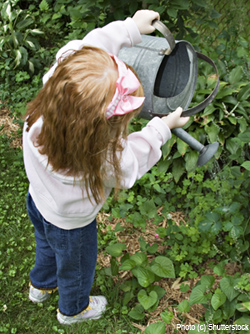
A garden is a place to play, learn, explore, work, relax and connect with nature and each other – for people of all ages.
Supervised babies and toddlers usually enjoy time touching and eating things in the garden. Talk about your surroundings as you show them things. Being outdoors provides them with health benefits and promotes calm. And growing some of your family’s food is the ultimate way to interact with the earth. Gardening is dirty work, though, so avoid any fuss about mess by wearing appropriate clothing for the job.
Preschoolers are often enthusiastic gardeners. The magic of propagating seeds appeals to their sense of wonder. They are usually eager to help – especially if moving dirt, using water or harvesting are the tasks at hand! Working together, they will soon learn how to grow their own plants and care for these themselves. Edible gardens often inspire picky eaters to try a wider variety of foods.
Life cycles, cacti, bonsai, cooking, craft and wild creatures will fascinate many older children. They may enjoy doing yard work for pocket money and explore other garden enterprises as well. Big kids can be genuinely helpful in the garden and gain much from working alongside an adult. The varied tasks in a garden provide pleasant physical activity.
I have always had my hands in the earth. I was blessed with gardening parents and grandparents. They allowed me to save pumpkin seeds from the kitchen scraps, bury our pet bird’s seed and plant cuttings from other gardens. I recall the times they bought me a packet of flower seeds or a basket of tiny plants especially for my enjoyment. It didn’t always fit their landscaping plans and I probably killed more plants than I grew.... But I have a connection with the earth that originated in my childhood gardens. Those gardens included a few pots on a window ledge in the inner city, acres to roam far from anywhere, shared gardens in rented units and then an average suburban backyard. Sometimes, they were even borrowed gardens at grandparents’ or neighbors’ homes, or even a couple of carrot tops to sprout on my dresser.
If you’re not yet a gardener, explore the joy and magic of growing plants alongside your children. Start simply and grow something you love to see or eat (you’ll remember to look after it that way). Beg or buy a few very basic supplies and tools, some seeds or seedlings and set them up in a place with at least four hours of full sun a day. All it takes is good food (some quality mulch, compost or a natural fertilizer applied every so often) and enough water. Check the soil just under the surface; when it’s dry, water well in the cooler parts of the day. Consider an irrigation line or well-placed sprinkler if you can’t hand-water regularly.
Try some container gardening or a small bed before digging up the yard for a large veggie plot! Read about no-dig gardens in books or on the Internet and employ these methods so that it won’t seem like work at all.
While some adults see them as out-of-place or untidy, straggly sweet peas or giant pumpkins climbing a wire fence are a thing of beauty to children. If you are a keen gardener, let the children learn by having their own space and doing it their own way. Our two-year-old saves weeds that I discard and pots them up with potting mix, nurturing them until they flower. She names them and takes them off to play, often forgetting their whereabouts so that we have to search for her little friends and return them to the garden area before bath time.
If you go outside to work in the garden for part of each day, even if it’s only for a few minutes to water and harvest before dinner, you may find that your children won’t be distracted by the swings or trampoline – they will want to garden with you.
Children these days spend much of their time indoors – books, television, toys, games, puzzles, learning and socialization. A great deal of their time is spent in the car, the house, shops, classrooms and other places made by humans – often with a lot of noise or other people. To have some peaceful space outdoors helps children recognize the natural rhythm and essence of life. Nature works its magic with little input from us; we can be extraordinarily busy or even sick with a cold but our garden will keep on growing.
Ours is a home-educating family and our garden is more than a place of fun. It’s our multi-sensory world of learning. We grow some of our own food in gardens, on fruit trees and vines and by raising hens for eggs. As we work together in the garden, each success and failure is a lesson. The children sell excess produce at a roadside stall and so the learning continues to another level. Outdoors, they interact with the world and each other in a more cooperative and loving way.
Recording your gardening experiences helps preserve your family gardening memories. You might choose a written journal, video, photographs, scrapbook, nature diary, stories and poems or a folder of artwork to record the beauty, magic, science, life cycles, surprises, visitors and more. Nothing inspires creativity like Mother Nature.
A garden is more than just plants. It’s a realm that runs parallel to ours where we – and our children – can touch and be touched by nature.
Belinda Moore is a home educating mother of six. She landed in tropical north Queensland, Australia quite by chance and enjoys the simplicity there, compared to her time in cities. Growing things has been a lifelong passion, no matter where she has lived. Other passions include her family, homeschooling advocacy, writing, sewing and environmental issues.
|
What to Grow?
Easy snack plants: snow peas, beans, cherry tomatoes, mild radishes, French beans
Simple flowers: sunflowers, marigolds, bulbs, nasturtiums, sweet peas
Exciting plants: pumpkins, gourds (for craft), luffa sponge, passionfruit, everlasting daisies, purple beans and corn
Perfect in pots: strawberries, a capsicum plant, a tomato bush, baby carrots, all herbs and flowers such as cosmos, pansies and petunias
Other gardens: mushroom kits, sprouting jars, terrarium, tray of cacti in pebbles, native plants
Related activities: worm farms, compost making, hens, pets, nature crafts, ant colonies, observing bugs, scarecrows and other garden art
Seeds or Seedlings?
Seeds:
Cheap, magical, fun. Collect your own from kitchen scraps or dried beans in the pantry. Buy old, traditional heritage varieties from seed suppliers. Catalogs offer an exciting array of varieties so the children can plan their next gardens.
Seedlings:
Quicker, already established for more success, available from hardware stores, markets or nurseries.
Safety With Kids In the Garden
Choose appropriate size and type of tools for each age group and supply small garden gloves.
Know which are noxious plants and remove them from your garden or explain to your children that they’re poisonous. You can obtain booklets about poisonous plants from the library or poison information center. Also avoid spiky, prickly and itchy plants in a young child’s garden.
Chemicals are best avoided in your garden (for the safety of both your children and the Earth). Even concentrated “natural” garden treatments should be locked away.
Spiders and snakes can by dangerous. Be aware of the species you may encounter in your locale.
Explain to your children about things that sting. Have your preferred remedy on hand should a sting be likely.
Water brings life to your garden but it can be hazardous too. Never leave your little ones alone with water.
Avoid harsh sun on delicate skin. Cover up and avoid gardening in the middle of the day.
|